This weekend, someone affiliated with art school hated me for inventing the cool new thing, which is push-ups followed by a shot of whiskey with protein powder in it. The feeling was mutual though, since I hate people who aren't strong. Anyway, I learned that this guy is involved with a kind of spazzy moshy band, and I couldn't help but wonder:
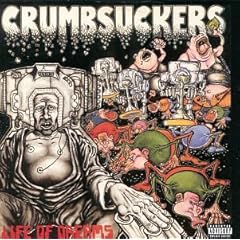
Why would you want to be in a spazzy band when the Crumbsuckers exist?The intricacy of the phrasings on this record could very easily get lost in the "relentless thrash attack" or whatever. The Crumbsuckers use the tonality defying flurry of power chords to construct their riffs,
typical of hardcore punk, and, by extension, metal. However, the Crumbsuckers tend to stray from the structuring patterns expected of say, a Discharge song, in which two simple riffs exist in binary, and the gestalt created from this pairing provides the thrust of the song. Rather, many of the phrases on
Life of Dreams are narratives in themselves, which moves the song beyond binary minimalism into more complicated structuring relationships. Also, when I've posted about
extreme music in the past, I've discussed breaking the enveloping atmosphere of the d-beat for hard hitting rhythmic emphasis. This usually occurs as a third option, breaking up the Riff A, Riff B, Riff A, Riff B structure.
However, in
Trapped, the phrases of the verse and chorus each resolve their own motion into this sort of emphasis. It's very easy to hear in the verse on the lines:
I'm All Clammed Up - Tell Me Shut Up
The chorus is an interesting variation on the verse, in that, although the melody changes significantly, it keeps a lot of the same rhythmic ideas, but puts them in a rather herky-jerky framework. It's tough to discuss this in terms of actual meter, since the d-beat is more of a "feel" than an actual, writable rhythm, but you can count the first part of the chorus in nine, then the second part in twelve. Resolution into a hard-hitting quarter notes closes each part, before finally putting us back on safe ground with a return to the verse or a transition into a straight backbeat.
Also, if you want me to like something, have a part like at 0:30 in Face of Death.
Hey, who remembers that fascinating post I did about
The Gordons a few months ago? It turns out that a
venerable blogger offered a link to their extremely difficult to locate second album:
I haven't had a chance to listen to it yet, but given the body of work that dudes have put together as The Gordons, and then later Bailterspace, I'm almost as excited as you are to hear it.

 Via Email

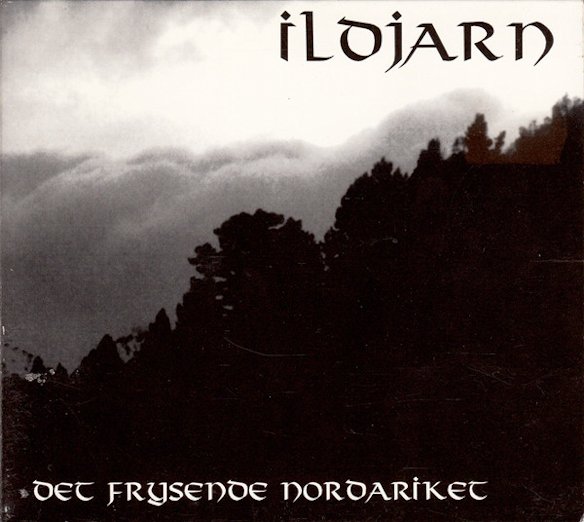 Huh, I've only posted one black metal album so far? This strikes me as odd, since I am grim and hateful (I just got my ears pierced at Claire's). However, after a bit of consideration, it makes a lot of sense, since black metal, as a genre, has very few recordings that are actually worth listening to. It's extremely easy to make albums sound like Hvis Lyset Tar Oss or Transilvanian Hunger without even understanding anything at all about what is actually great about those records. This perfect form, no substance phenomenon is also quite prevalent in genres such as hardcore and shoegaze.