Wednesday, May 1, 2013

Thrust Demos


Chicago metal has a strange and not-too-storied history, despite delivering some of the greatest and most influential bands of many metal sub-genres. Anyone who knows anything counts Trouble, Master and Cianide among their favorites. Those who have dug into Paul Speckmann's history give Death Strike & War Cry the respect they deserve on archivist metal blogs. Zoetrope put together some pretty impressive crossover thrash. However, Chicago is currently known for a lot of dumb bands that mistake "experimentation" for creativity, but in the 80s, Chicago was doing it right.

Thrust exists in that nebulous area in the early 80s before thrash metal was a codified genre. This has all kinds of melodic NWOBHM riffs, but is quite a bit more aggressive than even the first two Maiden records. Vocals are bizarrely sing-song in a way that portends the strangeness of Vio-Lence. Each of these songs is a riff fest that traces melodies through linear runs, galloping power chords, and more melodic rock chord progressions. "Speed metal" became something really foolish and cheesy at some point, but these demos showcase what the genre was capable of becoming.

Thrust Demo II

*Thanks to Scott from Cianide for sending these over and letting me post them.

Thursday, April 25, 2013

Fenriz Collection: 1996-2004


Inspired by my interview with Fenriz of Darkthrone, I put together of all the tracks from Darkthrone's "middle period" that were penned by Fenriz. After Panzerfaust, Darkthrone entered something of a mid-career lull. While many fans stick to some iteration of the first five records, these Moonfog albums should not be ignored. Part of the reason for the creative downturn is the shifting of much of the songwriting duties from Fenriz to Nocturno Culto. Not that Nocturno doesn't have his moments, ("Rust" from Hate Them) but many of his compositions drag and his melodic sensibility is just a little bit too obvious sometimes, especially given the volume of bands out there tremolo-picking various minor chords.

During this period, Fenriz shifted his composition style away from the hypnotic tremolo-picked melodies that defined Transilvanian Hunger into a much more punkish interpretation of his oft-cited influences: Bathory, Celtic Frost & Hellhammer. This stuff isn't "black metal" in the 90s interpretation of the term that Darkthrone helped create. This is regressive 80s metal. Every Fenriz riff has its own sense of conflict and resolution within itself, and, while strumming patterns are often primitive and repetitive, the melodies create a sense of rhythm.

Some of Darkthrone's middle albums can seem disorganized and boring, but, presenting only Fenriz's tracks creates a much more focused vision. If you haven't paid attention to this stuff before, you're in for a huge treat.

Sunday, April 21, 2013

Fenriz Interview


I interviewed one of the main riffmasters of all time over at Invisible Oranges: http://www.invisibleoranges.com/2013/04/interview-fenriz/

Tuesday, September 4, 2012

Like Rats - Like Rats (2012)


My goal for Like Rats is to create music that could have existed in the evolving extreme metal scene of the late 1980s and early 1990s. Many of the bands that are ostensibly related in defining genre parameters don't really sound much like each other. Morbid Angel sounds way different than Suffocation sounds way different than Deicide etc.

I wanted to write with the same feelimg as early material from Incantation, Immolation, Darkthrone, and Asphyx without actually sounding too much like any of those bands. I also wanted to maintain the punkish d-beat feel of Celtic Frost and Sodom (who just very clearly loved Discharge and Motörhead). Finally, I wanted to stress the dark melodicism that defines early death metal as well as artists like Dead Can Dance, Prokofiev & Strauss. Speaking of Strauss, trying to touch what these people have done makes me feel like an ape encountering a monolith, but such is life.

Here is a track-by-track breakdown with all of the riffs I can remember purposefully stealing. Some are blatant rip-offs and others are a bit more abstracted. I've noticed other acts of thievery upon relistening to the album, but these are the ones that were definitely intentional. Click each link to be taken to a youtube video timestamped to the pilfered riff.

Red Dawn:
Celtic Frost - Innocence & Wrath
Morpheus Descends - Proclaimed Creator

Fire:
Slayer - Piece by Piece
Death Strike - Pervert

River Dread:
Immolation - Into Everlasting Fire
Morbid Angel - Chapel of Ghouls

Winter Sun:
Sergei Prokofiev - Piano Sonata No. 6
Unleashed - The Final Silence
Massacra - Apocalyptic Warrior

Dark Masks:
Krypts - Dormant of the Ancients
Darkthrone - Summer of the Diabolical Holocaust

Dusk:
Sepultura - Morbid Visions
Celtic Frost - Eternal Summer

Direction:
Gorgoroth - Drommer om Dod
Sodom - Nuctemeron

Bloodline:
Sergei Prokofiev - Piano Concerto No. 2
Celtic Frost - Procreation of the Wicked (probably the single most influential riff on Like Rats)

Russian Midnight:
Richard Strauss - Also Sprach Zarathustra
Incantation - Nocturnal Dominium

And of course, here are external links for purchasing and listening:
Full album stream via Decibel
Vinyl via A389 Recordings
Digital download via A389 or iTunes

Tuesday, August 28, 2012

Other Women - Demo (2011)


Other Women is made up of friends who used to be in a band called Regrets, with whom Like Rats played many a gig. Their new band has way more bendy riffs, which is awesome. There's nothing quite like a good bendy riff. This demo is a perfect iteration of heavy, dark hardcore with lots of bendy, chromatic riffs. For fans of hardcore bands that clearly enjoy Celtic Frost (Sheer Terror, New Lows, Gehenna). Bendy riffs, man...

Monday, August 20, 2012

Negativa - Negativa EP (2006)


I'm resurrecting Primitive Future to post this EP, which I've been listening to extensively since I saw Gorguts a month or so back. Obscura is one of my all-time favorite albums, and this EP basically just sounds like Obscura. I also exchanged myspace messages with Big Steeve sometime around 2005 probably, and it blew my mind that someone from one of my favorite bands would take the time to respond to me on the internet. I actually think I just told him the story about my mom buying me a copy of Obscura then immediately making me turn it off when I put it on in the car.

Either way, the riffs on this record are truly strange. One of the most compelling things about Gorguts and Negativa is that, while their riffs are ostensibly nonsensical, they are immediately memorable. If you heard someone playing one of these riffs in Guitar Center devoid of context, you would be irritated and confused. Yet, as part of these songs, they're almost hummable.

Negativa also manages to be heavy in a bizarre, lurching way. Their riffs are occasionally bouncy, but still off-kilter. I know this band was working on a full-length, but unfortunately Big Steeve passed away a few months back.

RIP, Big Steeve.

Tuesday, June 12, 2012

Karl Sanders Interview


I recently interviewed Karl Sanders about the new Nile album "At the Gates of Sethu" for Alarm Press. Here's the full transcription of the interview. Enjoy.

This new record is awesome. By the way.

The new what record? The new Nile record? [laughs] Just wanted to clarify which record we're talking about. I'm sure there's a lot of new records out there.

There's plenty of new records out there. Not sure if any of them are good, but this Nile record is fantastic. Since you were just practicing, that's actually one of the questions I was going to start off with. On this new album, the lead playing seems to have been really taken up a notch, so I was going to ask what you actually do to practice.

Usually my routine starts pretty early in the day. I get up and start working with the metronome. Basic scales and arpeggios. I start off really slow with the metronome, then I gradually work my way up in tempo.

After a few hours of that insanity, it's onto new ideas. I'll work on new ideas for different melodic things or different techniques or maybe something I'm learning. I have a pile of instructional DVDs. Anything from Mike Stern to Paul Gilbert to Rusty Cooley to Jeff Loomis to Jeff Beck...I've been quite fond of that one lately.

Then, I might work on some new riff ideas for some songs. By that time, I'm pretty well warmed up and my hands can follow along with whatever my brain might come up with.

So basically playing guitar is a full-time job for you.

Yeah, especially in the last couple years. I had taken quite a bit of abuse on the internet based upon a stupid-ass video that...I should have taken more seriously. We were so completely exhausted on the Ozzfest tour that we just did not have the energy to dredge up the ability to give a fuck.

That video, which I got slammed for quite a bit, just really...It was really, really psychologically crushing. I'm going to take all of this ill will that people are throwing at me and turn it into a motivational iron will to improve. So that's what I've been doing the last few years. Just fucking working my ass off to push forward.

What are you working on right now?

I'm doing four finger patterns in diatonic natural minor. In each position, the four finger pattern changes so it takes a lot of fucking concentration. I'm working on that, trying to be able to move between the four different shapes. It's quite a challenge.

Do you do any improvisational work in practicing?

Sometimes after I'm finished with working on scales, I might just play whatever. Just jamming some blues with my kid and whatnot. That's fun. He's into...get this...Albert King, Stevie Ray Vaughn, and Eric Clapton. My seventeen year old kid...that's what he's into. Go figure!

Hey man, that works out fine. Those are some hot licks there.

Obviously to progress you have to continue to challenge yourself. Do you challenge yourself with other people's ideas or with your own? Which do you find to be more beneficial?

I think other people's ideas are a jumping-off point. I might learn a Rusty Cooley lick, but the next challenge is to make it your own. To take it somewhere new melodically or to take the pattern and invert it...in some way personalize it. That's really where I try to steer to. Even if I learn something, I try to make it my own and take it someplace that's a little personal.

In terms of actually composing these Nile songs, where do these riffs come from? Are you humming melodies to yourself? Are they coming out of licks that you practice?

On this record, like I usually do, I write the lyrics first.

When it came to writing the riffs, I did it just a little bit differently. Every day, after I'd gotten warmed up with a bunch of technique and stuff, I'd sit with the guitar and the lyrics sheet and just start riffing. Sometimes I'd just leave the recorder on. I've got my cabinet in the next room with the mic on it that goes straight to a digital record. I'd just record every fucking single riff. And just try to not think about the fact that the red button was pushed. I'd say to myself, “If I don't like anything, I don't have to keep it.” And saying that to myself was liberating. I'd just play a gazillion riffs.

The next day, I'd sit down and sift through them. I had so many riffs for this fucking album. It was insane. You could make a couple of albums out of all of the riffs that got thrown out.

So you'd basically end up jamming with yourself.

Yeah, I think so. Always with the lyrics sheet around so that my mind was on whatever the song happened to be talking about.

Nile obviously has a certain sound based upon certain scales and modes. Are you conscious of the theory behind this stuff while you're in your “jam sessions?” Or are you just tuning out and going for it?

I find the most beneficial things for me are to forget about the theory for awhile and play. And then examine the theory afterwards. Or, to learn a new scale and just see where it goes. Quite a bit of the leads just happened to fall into this scale that I had just come across in the last year called supraphrygian mode. It's like a phrygian mode, but it has a flatted fourth. It's got a lot of unique fingerings and pattern shapes that really worked well within some of the songs we were writing.

Now that you have all of these riffs is the arrangement a communal process? Or are you the one sifting through everything and composing with what you have?

Usually if I'm the one writing the song, I'm the one sifting through the riffs. If Dallas is the one writing the song, he self-edits just as well. Then we make song demos.

We record guitar, bass, drums, vocals. We recorded every single thing that was going to be part of the song. Down to the last iota. Especially with the vocals this time. We wanted to get the vocal patterns and phrases and melodies down there as soon as possible so that they could be under the same sort of scrutiny as the guitar riffs were.

I actually noticed that. The vocals on this record seem to be more intelligible and catchier.

I'd agree. I think the process of scrutinizing them and refining them at an early stage in the songwriting process really helped with that.

Just from a “fan” standpoint, I was thinking, “These songs are much more distinct because the vocal patterns are much more distinct from song to song.”

Also, how do you decide who songs?

There's things that Dallas does really, really well. There's things that I like to think that I can do. Usually it falls into...Dallas is really tight rhythmically, and I usually slither around the beat. Like odd phrasings.

One thing that happened while we were making these song demos...the very first song demo that we would make would be me recording all of the parts to be able to show it to the other band members. Then, the other band members would come and rerecord their parts. Those were always called the “Cave Box Demos.” I would sing in registers that I was thinking were for the other band members. Not necessarily the super low stuff that I do a lot. I ended up singing in more of an area that I thought would be ok for Dallas or Chris. Then Chris came to me and said, “Dude, you're fucking nuts! You're fucking crazy! This other voice you're using fucking sounds killer and we should be making use of this!” At first I was like, “What are you fucking crazy? These are just demos for me to show you guys your parts.” And Lollis [former bass player Chris Lollis] was like, “No man, this is an absolutely killer voice and we should make use of it.” So it turned out that we gave his idea a chance.

You hear some of that voice in track number two, “The Fiends Who Come to Steal the Magick of the Deceased,” the title track, “The Gods Who Light Up the Sky at the Gate of Sethu” and “Tribunal of the Dead.”

I actually just assumed that all of the different vocals were from the new bass player.

In a lot of the European interviews I've been doing, they said that to me when I told them that was me doing those parts. They're all like, “No, that's not you! That's the new bass player!” And I'm like, “You motherfuckers! The new bass player isn't even on the fucking record, so shut the fuck up!” [laughs]

It sounds like you guys have really tightened up the songwriting process for this record.

Absolutely!

Is there anything in particular that is an overarching goal that you're trying to achieve with these songs?

Well, my first goal was to completely and utterly not do anything we've ever done before in terms of song structures or time signatures or tempo changes. I wanted absolutely every bit of it to be something completely foreign to us. Which is kind of insane. About halfway through the songwriting process George Kollias, our drummer, sent me an e-mail. He said, “Karl, what the fuck are you doing? All these fucking insane time signatures and tempo changes and fucking weird fucking odd time riffs. Dude, please! You're killing me! Will you please just write something like old Nile? Something simple and classic, because you're driving me crazy with all of this shit.” So I thought about it for awhile, and I was like, “There's some reality to what he said.”

You can't go so far overboard that you lose the listeners. So I rethought my approach a little bit and I toned it down and pulled it back a little bit into the realm of the accessible. And I think he was absolutely right about that, because I think the album definitely benefits from the listenability factor. Listeners have to have something to grab onto. It can't be so technical that you lose your listeners.

I think that the vocals are a big part of the listenability on the new record. The vocal patterns from song to song differentiate the songs more than I've experienced on past Nile records.

I really agree with that. Each one of these songs has its own vocal approach. The rhythms and the melodies and the way the vocals fit with the guitar patterns...each one, to my ears, has a unique and distinct identity.

In terms of this newer record, is there something you'd like to see happen with this thing that hasn't happened in the past?

We want people to hear what we're doing. That was an absolutely primary focus. We want to capture stuff cleanly enough that the listener actually hears what we're doing. There's a saying that I've been beating up everyone on this record with that was involved in the making of it: If the audience didn't hear you do it, then you didn't do it. It counts for nothing. As far as guitaring and drumming and the bass playing and the vocals...if the listener doesn't hear it, then you didn't do it! We've had struggles in the past...you might play an awesome guitar riff or guitar lead, but, if for whatever reason, it doesn't come across out of the speakers to the end listener, then what good was it?

Another goal, and this was coming more from Neil Kernon. Neil came to the rehearsals for the record, and he said, “Guys, one thing we're going to really do is capture the fire and the feeling that you guys have here in the rehearsal room and make that translate through the recording process into the end product.” Because a lot of times that shit gets lost somewhere along the way. You know, the fire that the band has. Trying to record it, and you do it a thousand times to get it perfect. Sometimes, somewhere along the way, you lose the human element. That's one thing Neil really wanted to focus on this time: retaining the human fire and the spirit.

In terms of recording then, did you play the songs together or did you instrument by instrument?

Well, we always do the drums first. That's done with scratch guitars where Dalls or I will play along with George. We don't necessarily keep those guitar tracks. They're just scratch guitar tracks. You get the spirit of the thing going on in the recording.

Once we're satisfied with the drums, then we go about the process of laying the keeper guitars on there. The real ones. And this time, man, we took about a fucking month just trying to get that shit nailed down as clean as we could.

Cool man, those are the questions that I have for you.

[laughs]Well this was a goddamn fun interview! I'm glad to be talking about fucking music, shit that is actually relevant to the fucking record. I can't tell you, my friend, how many interviews I do that have nothing to do with the motherfucking record, and it's so frustrating.

Well yeah, that's usually my attitude when I'm interviewing anybody. What do I want to know? What do people usually ask other than about band name?

[mocking voice]What's your five favorite albums right now? What's in your Discman? What's in your iPad?

And I'm like, “There's nothing in my iPad!”

I mean, I guess I would be curious what you're listening to.

But yeah, as a listener, when I hear something I'm like, “Man, that's cool. How did these guys actually come up with this?” Especially for someone like you who has been in this forever and is continually getting better. You usually see the reverse.

You know, I don't live like that. I'm playing metal because that's what I want to do with my love. It's my passion. It is my life. I didn't start playing metal just because told me it was cool. No. this is something I've always wanted to do. Ever since I was nine years old and I picked up a guitar, this is what I've wanted to do with my life. Man, I'm always trying to learn. There's so many amazing bands and so many amazing guitar players, and you never have to stop learning. It's endless.


Wednesday, April 25, 2012

Weekend Nachos Interview

I recently interviewed Weekend Nachos, and the results are posted over at Invisible Oranges.

Take a look.

There is no future without the past...

The death of Mediafire has pretty much killed the primitive past. Sorry guys. E-mail me if there's something in particular that you want and I'll see if I can get you what you're looking for.

Saturday, February 4, 2012

Shoes - Black Vinyl Shoes (1977)

My friends in Merlin Wall seem to have gotten quite a few ideas from this Shoes album. Which also happens to boast one of the worst covers of all time. This is distant-sounding power pop with the hooks and melodic sensibility that discerning consumers demand from their catchy rock music.

Tuesday, January 10, 2012

Cianide - A Descent Into Hell (1994)

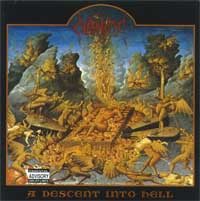
I've been readinga few "best of" lists from 2011, and the only record that I've listened to with any consistency from 2011 is Cianide's Gods of Death. As such, I present you with one of Cianide's early achievements. This band has been basically putting out the same album since the early 1990s. This albums is a logical extrapolation of Hellhammer's Apocalyptic Raids as well as "Procreation of the Wicked." This is fully primitive, and fully cohesive. Support this band.

Tuesday, September 20, 2011

Beautiful Mother - Vanilla (2011)

My nice friend and roommate Andy has collaborated with my other friend Dan on a collection of songs about sexual shame and dysfunction. Andy also plays bass in Like Rats and guitar in Weekend Nachos. Dan plays drums in Like Rats. This is highly recommended for fans of Steve Albini, Skin Graft Records, and nullos.

Sunday, September 11, 2011

Steve Taylor - I Want to be a Clone (1982)

Here is a bizarre, Christian new wave record that is cooler than almost every black metal record I've heard. Abort all fools.

Saturday, September 10, 2011

Jimmy Jones - Watch Out for da Big Girl (1996)

Watch out for da big girl. Watch out for da big girl. Watch out for da big girl. Watch out for da big girl. Watch out for da big girl. Wath ouy foe ad gig birl.

Tuesday, August 30, 2011

Hossam Ramzy - Best of Hossam Ramzy

Biggest seller on this thing is the version of "Khusara Khusara," popularly known to white people as the song sampled in "Big Pimpin'." This was part of a healthy stash left in our apartment by previous tenants. Get high off of my supply.

Monday, August 29, 2011

Cianide Interview

I interviewed legendary Chicago death metal outfit Cianide over at Invisible Oranges, so take a look ya turkey: Cianide interview

"We're just neanderthals. I'm cutting my lawn with a Venom shirt on, just sweating. Total neanderthal shit, man."

Their new record is also amazing, so consider enjoying that.

Friday, July 22, 2011

Arab on Radar - Queen Hygiene II (1997)

As a man afflicted with sexual dysfunction in the form of debilitating delayed ejaculation, Arab on Radar comforts me. I'm not the only one. I'm not the only one who is broken.

Monday, May 23, 2011

Huey "Piano" Smith - Having a Good Time (1959)

This chunk of proto-rock/proto-R&B has the same song over and over, but at least it's a good song. It also has the same descending piano lick over and over, but at least it's a good lick.

"Don't You Just Know It" was on these Wolfman Jack compilation tapes my dad gave me as a youth, and I was obsessed with it. I had impeccable taste, even as a child. Somehow that all went wrong around the onset of puberty when I got really into ska.

Anyway, this shit is unbearably catchy, and you can probably make some friends with these call & response choruses.

Friday, May 6, 2011

Patrick Stump Interview

I interviewed Patrick Stump not too long ago when he played at Schuba's in Chicago, and I present here the un-truncated transcription. If you're interested in the mind of a pop song genius or two guys nerding out about Michael Jackson, keep reading. Also, his EP Truant Wave, is, as expected, weird, super-catchy, and vaguely reminiscent of Prince, so track that down.

||||||||

Bottled water? Pillaging the earth of its resources?

Actually, I’m super against the bottled water. But, on this tour, logistically it was kind of rough. I was going to get the water bottles that have the filter in them. I figured I’d take water off the rider, because, even if it’s coming out of the pipe brown, if it’s going through a filter, it’s going to be fine. I couldn’t find it in time.

Consumer ethics on tour are tricky.

It’s rough, man!

Eating at McDonald’s and…

Well, I still don’t break that rule. I won’t eat at McDonald’s on tour. I will occasionally in other countries out of morbid curiosity. I just want to see what happens there.

What does happen there?

Everything is regionalized. Everything is regionalized. If you go into Canada, you can get poutine. You go to Japan, and you can get wasabi for the nuggets. They have lobster in Maine. Sometimes it’s cool to try it. Well, I haven’t done the lobster, since Maine is in America and that breaks my rule, but…

[laughs] You’ve got to draw the line somewhere.

So let’s get into this a little. One of the things that I’m very curious about is that, since you’re doing this by yourself and there’s a lot going on in the songs…is this all a fully-formed product in your head that you then pick out or do you create something then layer it?

It’s hard to describe, because it kind of is a fully-formed thing in my head. It’s just a matter of what sounds am I going to use to achieve that. Somebody like Michelangelo, you know, somebody huge….was saying that he starts with a rock…well, “started,” he’s been dead for awhile now…Anyway, he would see his finished product in there, and it was his job to get it out. It’s kind of like that, in that I know what I want to get, and I know what I want it to sound like.

Actually, you can go overboard trying to get it, too, since you’re by yourself, and there’s nobody there to stop you, and you can layer on as many things as you want. There is a lot of experimentation, but I usually have a pretty good idea of what I want it to sound like.

I imagine a lot of details like that come out in “jamming,” but you can’t really just “jam” if you’re doing it by yourself.

That’s interesting because I don’t really “jam” that well. Sometimes I have creative dreams where I’ll get flashes of it, and then I just have to figure out how to do that. That happens to me a lot. A lot of these songs are things that I heard it in my head pretty much as it is, and then I have to go back and reverse engineer it to get it that way.

Similarly, something like Prince, where that dude is just a maniac…

And I know for sure that he just does kind of screw around sometimes and he is just experimenting with things.

I think in some other interview you referenced Timbaland.

Yeah, yeah! His drums are huge to me!

So, something like that is just layers upon layers. So, you have a pretty good idea of the rhythm you’re looking for?

Yeah! I’ll know the general groove. Lyrics come last in that context. They might be written beforehand, but they get applied to the song last.

On my version of Thriller, it has the home demo of “Billie Jean,” and I was blown away because it has the little violin part [at the end of the chorus]. I was like, “whoa, that dude was planning on doing that all along!”

That’s what’s crazy, because there’s so much you think is maybe Quincy Jones. But it’s really just Michael just going nuts. Or the home demo of “Don’t Stop Til You Get Enough.” You can hear him talking to Janet because she’s in the background singing harmonies, and he’s like “I need more cowbell in the phones.” But the song as a whole sounds pretty remarkably like the album version.

Speaking of which, did you hear the new Michael Jackson record?

Yeah, I did. It was a tough decision, because I was like “do I listen to this and commit sacrilege?” But, at the end of the day, it’s still a new Michael Jackson record, and that’s amazing.

“Behind the Mask” is insane.

There’s a few songs on there that I’m like “if he were still alive, that would have been a hit.” Like “Hollywood.” There’s that one song that they released first…”Breaking News,” which is just scathing.

He’s pissed!

He’s so pissed off! I was psyched on it, because it’s like hearing him yell. He’s mad. I was like “killer!”

Although he didn’t drop any racial slurs in that one.

[laughs] Next time, next time.

So, at some level, these new songs of yours sound like hip-hop, where the focus is on a beat or a groove. However, Fall Out Boy is much more melodic.

Everything has always been rhythm to me. Even in Fall Out Boy where it’s more melodic. I always kind of wrote music like a hip-hop beat where it’s kind of separate from melody. You leave space for it to be melodic, but it’s more or less thought out before the melody was there.

And sometimes it was even separate. I would read Pete’s lyrics and have a melody without any music. And I would find songs that I had already written the groove to that it would fit over. It was always different. I still rarely ever do the thing where you freestyle the melody and come up with the words later. Words are everything to me. If I don’t have the words first, then there’s no song.

One of my biggest struggles in writing songs is combining my gibberish words with actual lyrics.

That’s the thing! I find that it’s easier to take words first and make a melody out of them rather than trying to go the other way around. I kind of learned the way that I do it now by accident, because that’s just the way that Fall Out Boy wrote. It’s really rewarding for me as a writer. I’m always happier with the lyric when I spent some time on it just as words first, and then later found a place for it.

Speaking of that, Saves the Day’s Through Being Cool is really hard to sing along with because of that phenomenon. You can tell that dude had his melody, and just kind of jammed lyrics into it.

There’s a lot of strategically placed “whoa”s that fill in those gaps.

People will put on “Shoulder to the Wheel” and sing along with every word, and I’m like “how are you even doing that?”

You just love that song that much. You just know it. [laughs]

In a lot of your songs, I find the pre-chorus to be catchier than the chorus. Do you ever do that on purpose?

[laughs] Yeah, sometimes. Speaking of Michael Jackson, his choruses are almost never choruses. When you look at “Billie Jean,” it’s all about the [sings]”People always told me be careful what you do.” Also, Prince! Look at “Controversy.” [sings]”Some people want to die so they can be free” is the catchy part. There’s almost no chorus in that song.

It’s not usually conscious. I’ve tried a lot of different types of song-writing, and that’s kind of the A-B form that’s been sticking with me lately.

Even something like “Spotlight” where the chorus is kind of big, the part of the song that actually sticks with me is the pre-chorus.

And that’s what I wrote it around, too. In fact, they may have been two separate songs originally. I think I might have been singing the pre-chorus, and then just threw in the “Spotlight” at the end. And I was like, “Oh, that could be more of a hook!” And I made it into a whole song.

How did you become such a good singer? Just listening to your discography, you get markedly better throughout time.

I got less scared of my own voice. I did get better, but I also think that I was better than I was singing. I started out, and I was in this punk scene with all of these pop punk bands. I was a drummer and I always wanted to sing back-ups, and all of my bands were really disparaging of my voice. They were all like, “Ugh, your voice is so pretty.”

So, I was really scared of it. I was kind of ashamed of it. I wasn’t trying to sing in Fall Out Boy, I was trying to be the drummer/songwriter or whatever. So, when they asked me to sing, I was like, “Ok, I guess you want me to sing ‘pop punk.’” So I affected my voice a lot more. I was still really hiding behind that.

I never really sang the way I actually sing in front of them for years. I did a little falsetto at the end of that song “Saturday,” and I was just messing around, and Pete was like, “Do that! That’s awesome!”

They embraced the way I sang, and that got me to relax a bit and be more honest about the way I sing. And it’s not even like I was dishonest, I was just terrified. It’s a lot easier to do an impersonation of what you think a singer is supposed to sound like than to go out and be yourself.

That’s one of the things that my mom said when she heard this new EP. She’s like, “You finally, totally sound like you.”

That’s a good compliment.

That’s a big compliment. That’s a huge compliment. That made me feel really happy.

I’ve worked with a lot of really amazing singers in the studio, too, who have these really amazing voices, but they’re kind of hiding behind something affected. The biggest lesson I ever learned is just let it out. You singing in the shower? Do that. That’s better than all the other stuff you do.

But also the shower just has really nice acoustics.

It does! It just makes you want to sing.

What do you sing along to?

You know what’s weird? I used to sing along a lot. I used to sing along to everything. To Michael Jackson records, to R&B records, to punk records. Now, when I’m not making music, I don’t listen to music. I just relax. It’s weird. It’s a totally different thing now.

I said this once to somebody, and I was like, “You’ve gotta think that porn stars might have the most vanilla sex lives.” And this guy was like, “Actually, I know Nina Hartley and she’s very prominent in the swinger’s scene.” And I was like, “Sorrrrr-ry. I don’t go to a lot of those parties, I’ll be honest. And I didn’t know that.”

[laughter]

When I go home, it’s kind of quiet. I can’t be very passive, when there’s music around. It’s hard for me to watch shows, because I want to play. I can’t dance because I want to play. So, I don’t sing along anymore.

So, when you write songs, do you steal? I know I have a list of songs that I want to take an idea from, be it a chord change or…

I think everybody does something akin to that. Some people outright steal, some people pay homage…I’ve done all of it. There are songs that happen where you don’t know where they come from, and there are songs that happen that you know exactly where they come from.

There’s a song that I’ll play tonight that’s on Soul Punk, and it’s called “Everybody Wants Somebody.” And I know that I built that song around wanting to play live drums like an old Linndrum from Minneapolis. Like Prince, or The Time, or Vanity 6…something like that. I wanted it to sound like those kind of drums. It’s kind of a composite groove of the best of those drum grooves. Sometimes there will be simple things like that, and that’s what starts the song.

Everybody steals. It’s important to know…how to be comfortable with it. Fall Out Boy, early on, took a lot from Saves the Day and Green Day…some Lifetime, a couple Kid Dynamite things. Just as Green Day is fairly open about taking from The Who and The Ramones. You take from your heroes, but you’re you, so it’s going to sound different.

I also feel that the more further removed the genre is, the more comfortably one can steal.

That’s one of the things that’s funny…I was reading something about Prince. A jazz musician said he saw Prince at the show, and he did this one drum fill…a very signature drum fill that was his drum fill…and then Prince’s record came out, and there was his drum fill. And it’s like “whatever.” It wasn’t on MTV so no one knew it unless you were at that show. But everyone does it. And most of us don’t even know we’re doing it half the time. It’s just being open to the experience, I guess.

You did vocals for the new Weekend Nachos LP. Are you still in touch with any hardcore or metal?

Yeah, yeah. It’s one of those things where…it’s not one of those things where it goes away, where it’s not part of my life anymore. I was really attracted to a lot of the political bands, you know? Tim from Rise Against…I was always into all of his bands. I was really into Racetraitor. You know, I was into a lot of the political hardcore bands in Chicago.

And right when [Fall Out Boy] started, a lot of the people were abandoning it and making different music altogether, like Pelican. Then you also had a lot of the really tough guy crew hardcore bands. I always dug that stuff, but I didn’t feel as communal with it. I didn’t feel like I could hang so much.

So, it’s cool now seeing bands like Weekend Nachos. Weekend Nachos in the first place kind of started out as a joke then got really good. They weren’t taking it seriously, then got kind of awesome.

So yeah, I still keep in touch with some of my friends, but it’s hard to keep in touch with anybody anymore honestly. I’m kind of an outsider now. I’m kind of back to being a mailorder kid. [laughs] I came full circle.

Sending away to Asian Man Records.

Yes. Or what was it?

Hopeless?

No, no. Very Distribution.

I don’t think I ever ordered from them.

Very was this giant catalogue, and it would just be full of…they had every hardcore record you could ever want in there in like five different colors.

My money all went to Asian Man, Hopeless, Lookout!, and Dr. Strange.

Absolutely. I sent a lot of money to Asian Man. I sent a lot of money to Lookout!.

So, you have a mainstream audience at this point. But you’re still someone who came out of this subcultural scene. I think this is really interesting because, speaking of those political hardcore bands, it’s like “oh yeah, all the kids in black t-shirts can hang out in the corner and be mad about stuff together.” But you get to talk to people outside of that group with your music.

Which is something of a….something of a plan. Definitely not a full on plan, but it’s something that I’m not going to shy away from. I was always attracted to making more or less pop music. But I’m still as into the things that got me into the punk community in the first place. I’m still as into the politics.

So, I get to say a lot of things to an audience…Well, I would have gotten to say these things to a punk audience, but they would all agree with me so that’s whatever. I think that’s potentially more powerful.

See, but that’s the thing. Fall Out Boy got slammed a bit for leaving politics behind. We were a vegan straight edge band when we started. There’s one straight edge vegan in the band now. We ended up not singing about that stuff as far as people know. But, we really got into metaphor, and disguising a lot of things. Especially on the last two records [Infinity on High and Folie a Deux]. They were very political…openly political. And people were like “oh, they’re talking about being famous.” And I’m like, “Fuck man! That’s not even close!” Especially on the last record.

I could be accused of the same thing when you listen to Soul Punk. On the surface, a lot of these things sound like I’m talking about girls and parties. I’m not. Ever. Everything is something else, and that’s kind of the point. And I get to do that. I get to say really extreme shit, but I’m disguising it as a girl. I’m disguising it as a drinking song. I can say pretty left wing shit.

So you are actively using your “fame?”

Yeah it’s not like…not in a contrived way. Artistically, that’s how I want to say it now. I don’t want to scream anymore. I’m tired of proclaiming it. I want to express what I’m thinking, and that’s the way that’s been cathartic for me to express it. I feel better after writing this way. Not to sound too posi. [laughs]

So, even as a celebrity…I mean how many Twitter followers do you have? When you say something, people are going to pay attention.

Yeah, well...sometimes. Sometimes they listen, sometimes they don’t. I wrote about rescue animals. I wrote something about making an effort to get rescue animals a home. I also wrote about having never seen an episode of Jersey Shore. I’ll give you two guesses which one got retweeted more.

But then again, if you blog or anything like that, you can sort of figure out how to push people’s buttons so they comment or whatever.

Yeah, and there’s definitely some psychology to it. But, I always just try to be honest and say what I’m really thinking. I never want to be full-on contrived, but I do want to say things to people.

And…this is actually one of the things that I think I’ve learned. This is a big difference between me now and me ten years ago. I used to be so angry that the only way I could handle it was confrontation. I had to confront you about what you’re doing wrong. About how fucked up what you’re doing is. Now, I’m just as pissed off, but now I’m going to empathize with you and force you to empathize with me so you understand where I’m coming from. So we listen to each other and actually get something done. Because I really do believe in this shit.

Yeah and that perspective…it’s sort of like when you’re sixteen and you get all mad about bands “selling out.” Then you get a little older and you’re like, “oh wait.”

Yeah, and with selling out…I used to believe that it was this thing that you had a choice in the matter. But you don’t! You have no choice!

I remember sending an angry letter…[laughs]

Tell it! Tell it!

I’m having a hard time speaking because this is so funny to me. I sent an angry e-mail to Thursday when they signed to Victory Records. [laughter]

The thing is…there’s perception that somehow going indie is more legit or whatever. There are dishonest douchebags everywhere. That’s another really dark lesson I had to learn. The indie dudes aren’t cool, either. They’re all trying to cheat you.

We [Fall Out Boy] didn’t think anyone was going to come to our shows. We didn’t think we were going to be a big band. You don’t really make these choices.

And the thing that fucked us up, is that on each record, we actually did try to get more and more weird…more and more out there. Because we were really scared of being this big band. And somehow we got even bigger. And I was like, “Well, shit…”

I’ve got one more thing I want to ask you. So, you have this EP. You have this LP. I assume you have years of weird backlogged material. How do you approach this? Are you releasing an album? Are you releasing a compilation of your best material?

The first thing I tried was recording my “best of.” Recording all my best songs that hadn’t been released yet. I tried that and it sucked. I was happy with all the songs, but it didn’t make any damn sense as an album. So I went back, and scrapped most of it. I picked a couple songs that made sense with each other and made an album around that.

Which, again, is why the music and the lyrics got to be so distinctly metaphorical. The songs that I thought really worked together had that vibe. There were some songs that had that angry political vibe. And there were some songs that were musically very different. So, it is very much an album to me.

And that’s the other thing is where do I go now? I have a potential second record that is totally different. Maybe more poppy. But I don’t know that any of that is ever going to come out. By the time I make record two, what am I going to be doing?

Thursday, April 28, 2011

Gorguts - Obscura (1998)

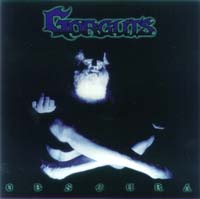
One of my first trips to Chicago's Metal Haven (RIP) was part of a lunch date with my mother. I had recently gotten into "technical death metal" and I was obsessed with Cryptopsy. I hadn't heard Gorguts, but I was aware that they were another totally crazy French-Canadian death metal band. A promo copy of Obscura was in the used section, and I bought it (along with a dumb Marduk CD I think). I put it on in the car ride home, and my mom immediately asked me to turn it off.

This record is absolutely insane. So heavy. So weird. Consistently one of my favorite albums ever since that fateful day what must have been eight years ago.