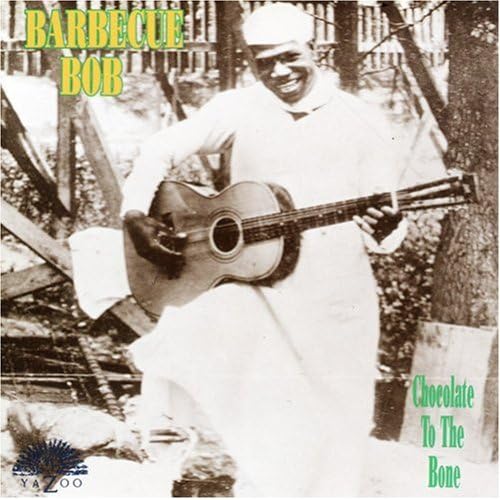
This is not the cold haunting of Skip James. This is motherfucking Barbecue Bob, motherfuckers, and he too is a guitar freak. Chords are practically eliminated on many of these recordings, and we are instead treated with BBQ's slide trickery. Check out Mississippi Blues, where he mostly follows the vocal melody before concluding the phrase with his trademark VI V VI I (also prevalent in Chocolate to the Bone that reappears in Jacksonville Blues).
I love the idea of having a catchphrase-style lick: Michael Jackson's "hee hee hee", Unleashed's first bar of all of their mosh parts. What a cool thing - if you can think of more share that shit in the comments.
Atlanta Moan is another great example of this tangy bastard following his voice with his guitar and inserting sparse chording as a driving backbeat - then jumping quickly into leads to transition from chord to chord in the 12 bar structure. Super secret family recipe lookin-ass.
Friday, May 29, 2009
Monday, May 18, 2009
Sun Ra - The Nubians of Plutonia (1959)
The Nubians of Plutonia, like many of Ra's works, is extremely percussive for jazz, bringing unsubtle, yet deceptively nimble rhythms to the forefront. Notice the bells and hard-hitting toms in Watusa - also notice the similarity to Brubeck's Take Five except in 6/8 rather than the notorious, infamous 5/8.
Africa is a great example of a real transporter of a track. I don't know if it's possible to listen to this song without dissociating from reality and having Ra's thoughts plastered all over your retinas. Once again, percussive hard-hitting toms provide the framework for textural, rather than melodic, improvisation.
The discord of Aiethopia and Africa, in contrast with the upbeat progressive big band sound of Plutonian Nights, shows Ra's all encompassing genius, as all of these songs unquestionably bear his mark. I am disappointed in everyone I know for not being as interesting as Sun Ra.
Note: This is ripped from the CD reissue, which pairs The Nubians of Plutonia and Angels & Demons at Play. The track numbers don't start at one since I only posted the Nubians tracks.
Thursday, May 14, 2009
Phuture - Acid Trax (1987)
I've been hitting these late 80's recently, which is pretty cool. Really good era during which to be barely alive. Man I had a tricycle and a wrap-around porch when this shit came out, now imagine all three combined. Got the life, my doggs, got the life. However, I was not yet a Chicago resident. No, I lived at the base of the Catskills, and I was a blue-eyed blonde with an ugly-ass New York accent. Lagwadia.I usually think of 'psychedelic music' as a term with undeniably organic connotations, so experiences with acid house where samplers are used to hack into the hallucination centers of my mind and coat them with a bubbling, chirping effluvium are pretty great. I can't tell if Phuture is a good trip or a bad trip. Sort of a third way outside of the dystopia of Nekropolis and the pulsing bliss of Ash Ra Tempel. This is a new paradigm in which to experience the horrors and beauties of technology, and also in which to get naked with girls for a bit of the ol' in-out in-out!
Saturday, May 9, 2009
Sepultura - Beneath the Remains (1989)
Anyway, I named this very blog after a track on this album, so just apply all of the good feelings you have about my writing to listening to Sepultura, and you'll be on the right track.
The thing that makes Sepultura one of my favorite bands is their technique of rapid-fire variation on a theme. The intro to Sarcastic Existence (really cool song title) is a great example; notice how the riff slowly morphs every four bars into something just a little bit different, as rhythmic emphasis shifts and melodies come in and out. Eventually, the riff also evolves vocals, and the linear progression starts to fall back in on itself in a looping structure that abandons past adaptations only to find them again later on in slightly different form. Genius.
Also, the melodic riffing on this record is really great, as most of these songs are based upon E phyrigian with a sharp third, so the tonic triad is major rather than minor. This gives a happier sound than one would expect from most metal records, but the first four notes of the scale are still the ever-popular E-F-G#-A that have provided the basis for countless metal riffs over the years. Perfect examples of what I'm talking about can be found as the intro riff on two back-to-back tracks: Slaves of Pain and Lobotomy. Although it was quite foolish of the track-lister to place these astonishingly similar intros back-to-back, this provides great insight into Sepultura's techniques of riff-craft.
Sunday, May 3, 2009
Sam Mangwana, Franco & TP OK Jazz - Forever (1989)
I received a request awhile ago to post more material from Africa, and then I forgot about that request. Fortunately for you, Pat, I just remembered, and now there is a nice digital slab of Sam Mangwana, Franco & TP OK Jazz available for your hard drive's pleasure.Franco's guitar playing is a very sneaky beast, as he uses lots of two string intervals interspersed with little pentatonic melodies and arpeggiations that make use of open strings. I'd really like to observe what positions he's playing in, since it seems like he's sliding all over the fretboard, but always ending up with plenty of closed voicings using those open strings. Likely, he's just a brainfreak with tens of thousands of hours of practice trapped in his neurons, so he can do whatever the fuck he wants.
Basically, any music with the beats on the "and" of two and four is good summer music, and when I think of summer, I think of an army of babes in my backyard, all converging on me to apply trigger point therapy to the crunchy spot between my my right shoulder blade and my spine. This is what summer means to me. Everybody come over we have a garden now and our record player is finally set up with some vinyls of the ol' Ludwig van.
Labels:
*Africa,
1980s,
Franco,
Sam Mangwana
Monday, April 27, 2009
Pandit Pran Nath - Ragas Yaman Kalyan & Punjabi Berva (1972)
Indian classical music is an attempt at collectively scratching that itch on the way to enlightenment through a highly complex system of improvisation based upon melodic modes and rhythmic patterns. I, unfortunately, don't have the necessary base of knowledge to break down what is actually occurring on these recordings, but I do know that the primordial ooze flowing through my body starts to bubble and burst when these sounds tickle my eardrums.
PS: For any other bloggers out there trying to figure out the issues with hard returns and formatting, it has something to do with haywire-ass div tags. I still don't know where they came from, but, when I cleaned out those extra div's, my posts finally began to meet the stringent aesthetic standards that I had envisioned for them.
Labels:
*Indian Classical,
1970s,
Pandit Pran Nath
Saturday, April 18, 2009
Beach Boys Collection
So, what I did was take all of the best songs from those albums and put them in one spot, because, believe you me, the songs here are fucking transcendental.
Structuring is similar to that described in my recent Buddy Holly post, in that extended chord progressions are used to build up to a specific point ("Surfin' USA!") while contemporary verse/chorus arrangements are largely absent. These songs are also super-fucking short, which rules, because I don't always want to hear the half-time chorus/vocal histrionics at the end of a song (sometimes I do want to hear this).
Pick out some voice-leading harmonies! Shut Down and Catch a Wave both have some keen-ass contrary motion, which makes me wonder if the Boys were thinking in terms of chord inversions or some weird-ass sibling mind-meld counterpoint shit, being very neglectuful of equal temperament, etc. Either way, what we end up with is a viscous musical texture pulling at the edges of reality, with the shockingly banal lyrics and more apparent-in-hindsight melancholy only adding to the surreality of the experience. The contrast between the basic rock pentatonic scale framework and the lushness of the vocal melodies (see also: The Beatles, Motown) is sometimes more appealing to me than the more cohesive blending of instruments and vocals found on Pet Sounds and later works.
Also, check out the lyrics to Be True to your School. Whoa!
PS: Can any more knowledgable bloggers explain why the hard returns in my posts keep getting all fucked up? I can't make sense of this!
Labels:
*Pop,
*Rock,
1960s,
The Beach Boys
Monday, April 13, 2009
Midnight Star - No Parking on the Dance Floor (1983)
Cheesy ad-lib lines like "Let me plug you in, baby" on Electricity bring to mind the question: which is responsible for more creeps, sleazy R&B one-liners, or Hollywood-style romantic comedies rewarding male awkwardness/desperation with the love of babes?
Freak-A-Zoid is the unquestioned star of this record, with its thickly layered, highly syncopated robot beat that would make Timbaland proud. Oh and the cut-up, black metal vocals in the intro (probably really a James Brown sample). The melting pot of weirdos/geniuses like Kraftwerk, Prince, James Brown, George Clinton & Giorgio Moroder is what this blog is all about. That and really stupid mid-song skits about how to spell "freak-a-zoid;" typical of uptight, British squares not to know how to spell "zoid."
Guys, I would have been "out" all of the time in the 80s. Is this what bro bars played instead of Flo Rida, because that is pretty much my dream. Imagine the frattiest bro bar just playing Prince and Prince rip-offs. As much as I rag on civilization, that would make up for just about all of its wrongs.
PS: Two of my closest friends have recently updated their online presences. I don't pretend to know anything about non-auditory forms of art, but I do pretend to like guys:
Labels:
*Funk,
*Pop,
1980s,
Midnight Star
Thursday, April 9, 2009
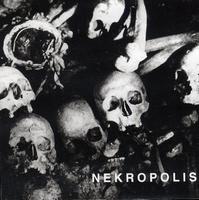
Nekropolis - Musik aus dem Schattenreich (1979)
"Pulsing" is a good word to describe a lot of krautrock, such as the funky, busy-body songs of Neu! that incessantly call images of Sim City to mind. How interesting to hear that feel recontextualized in Holle Im Angesicht, this time as the next evolution of a rat picking its way through the post-civilization wreckage of the same, once-thriving metropolitan center. The groove of Ghul is textured with the wailing of several hundred televisions blaring to empty apartment buildings, all inhabitants, save the rat, victims of a superbug that is just beginning to stir in the bellies of our midwestern CAFOs. Lights out listening is mandatory for this one.
PS: This rip is from the excellent Mutant Sounds blog. Take a second to consider their bountiful offerings.
Labels:
*Electronic,
*Prog,
1970s,
Nekropolis
Thursday, April 2, 2009
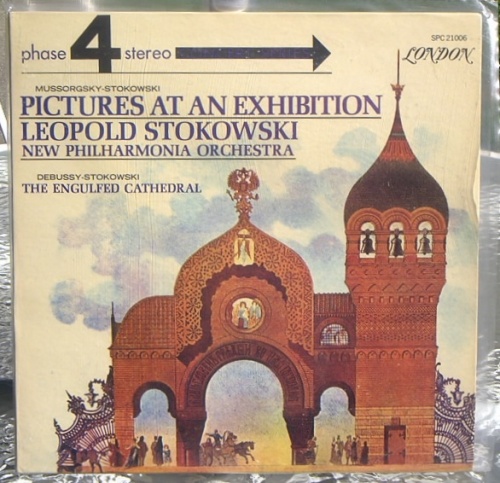
Modest Mussorgsky - Pictures at an Exhibition (1874)
Mussorgsky originally composed this as a suite for piano, but it has been arranged for orchestra many times over. I'm not sure which arrangement this is, since I have a hard enough time keeping all of my digital music in order by artist and year; how dare you also expect me to keep track of arranger & performer, you bully?
The composition mirrors Mussorgsky's movement through a friend's posthumous art exhibition. This type of literal representation in composition is very interesting to me, as I tend to think of music in extremely abstract terms. I suppose this style of composition can push you to new realms of creatvity in an attempt to mirror a specific experience, but, for me, music is its own reality. Music is my only friend, because I can't relate to anyone. Papa Roach. But seriously, I just want to listen to The Ballet of Unhatched Chicks on repeat.
Labels:
*Romanticist,
1870s,
Modest Mussorgsky
Tuesday, March 24, 2009
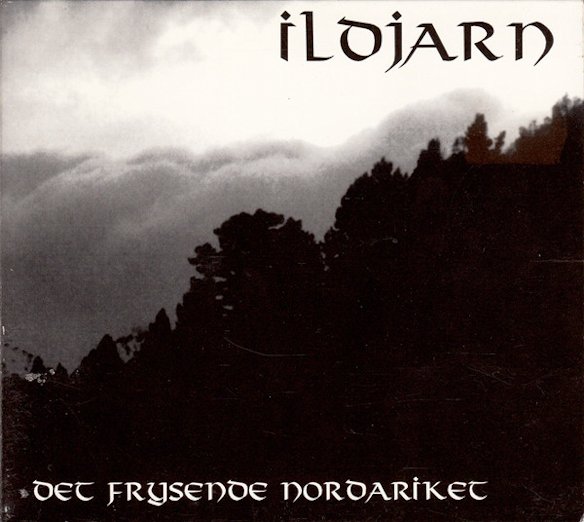
Ildjarn - Det Frysende Nordariket (1995)
That said, Ildjarn, although a kindred spirit in minimalism, doesn't sound much like Burzum or Darkthrone. Binary pairs of Discharge riffs have evolved syncopation and chromaticism through sliding fifths as a feral response to agrarian decadence. Drums provide a loose tempo structure, a blundering pulse with too many errors to truly achieve the ambience of some of Ildjarn's more technically skilled peers. These are the sounds that your firing synapses make as you imagine running off into the woods; this is the rawest, most primitive, most emotional music.
Monday, March 16, 2009
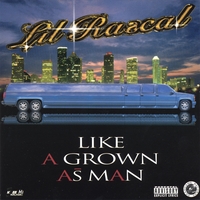
Lil Rascal - Like a Grown As Man (1995)
Enjoy how Lil Rascal often raps in a nice swing (first song, One a Day, for a good example), accenting the same beats as the hi-hat in a typical blues shuffle (Here is a fruity guy teaching how to play a blues shuffle on the drums). Even though much of contemporary rock and hip-hop employs a straight quarter note hi-hat pattern during most backbeats, the shuffle feel is ubiquitous. Rather than using the hi-hat to provide the swing, the kick drum serves this purpose. This is particularly obvious in the sparse beats so prevalent in early 90s New York hip-hop. Let me think of a good example um um um: stab your brain with your nosebone. Then you start to realize that syncopated kick is just absolutely everywhere.
Anyway, this Lil Rascal album is a great slice of G-funk influenced Texas rap, and dude doesn't just hugely, massively bite 2Pac.
Monday, March 9, 2009
Buddy Holly - The "Chirping" Crickets (1957)
What I'm trying to say is that going to a play with my parents reminded me of Buddy Holly. Avid readers & fans may recall my post about Skip James, in which I discussed compositions based upon the twelve bar blues. Many of Holly's compositions follow in this tradition, even if they may vary from the exact chords of a standard twelve bar. Consider Oh Boy. The point of this song is the hugely catchy "All of my love, all of my kissin, you don't know what you've been missin!" which then continues through the twelve bar form. This phrase is offset with a view different bridges. These are techniques that make me excited to write songs. In conclusion, fuck blogs, write songs instead.
Monday, March 2, 2009
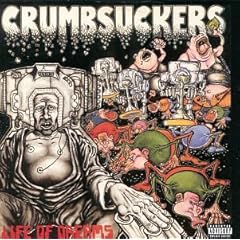
Crumbsuckers - Life of Dreams (1986)
The intricacy of the phrasings on this record could very easily get lost in the "relentless thrash attack" or whatever. The Crumbsuckers use the tonality defying flurry of power chords to construct their riffs, typical of hardcore punk, and, by extension, metal. However, the Crumbsuckers tend to stray from the structuring patterns expected of say, a Discharge song, in which two simple riffs exist in binary, and the gestalt created from this pairing provides the thrust of the song. Rather, many of the phrases on Life of Dreams are narratives in themselves, which moves the song beyond binary minimalism into more complicated structuring relationships. Also, when I've posted about extreme music in the past, I've discussed breaking the enveloping atmosphere of the d-beat for hard hitting rhythmic emphasis. This usually occurs as a third option, breaking up the Riff A, Riff B, Riff A, Riff B structure.
However, in Trapped, the phrases of the verse and chorus each resolve their own motion into this sort of emphasis. It's very easy to hear in the verse on the lines: I'm All Clammed Up - Tell Me Shut Up
The chorus is an interesting variation on the verse, in that, although the melody changes significantly, it keeps a lot of the same rhythmic ideas, but puts them in a rather herky-jerky framework. It's tough to discuss this in terms of actual meter, since the d-beat is more of a "feel" than an actual, writable rhythm, but you can count the first part of the chorus in nine, then the second part in twelve. Resolution into a hard-hitting quarter notes closes each part, before finally putting us back on safe ground with a return to the verse or a transition into a straight backbeat.
However, in Trapped, the phrases of the verse and chorus each resolve their own motion into this sort of emphasis. It's very easy to hear in the verse on the lines: I'm All Clammed Up - Tell Me Shut Up
The chorus is an interesting variation on the verse, in that, although the melody changes significantly, it keeps a lot of the same rhythmic ideas, but puts them in a rather herky-jerky framework. It's tough to discuss this in terms of actual meter, since the d-beat is more of a "feel" than an actual, writable rhythm, but you can count the first part of the chorus in nine, then the second part in twelve. Resolution into a hard-hitting quarter notes closes each part, before finally putting us back on safe ground with a return to the verse or a transition into a straight backbeat.
Also, if you want me to like something, have a part like at 0:30 in Face of Death.
Hey, who remembers that fascinating post I did about The Gordons a few months ago? It turns out that a venerable blogger offered a link to their extremely difficult to locate second album:
I haven't had a chance to listen to it yet, but given the body of work that dudes have put together as The Gordons, and then later Bailterspace, I'm almost as excited as you are to hear it.
Labels:
*Hardcore,
*Metal,
1980s,
Crumbsuckers
Subscribe to:
Posts (Atom)